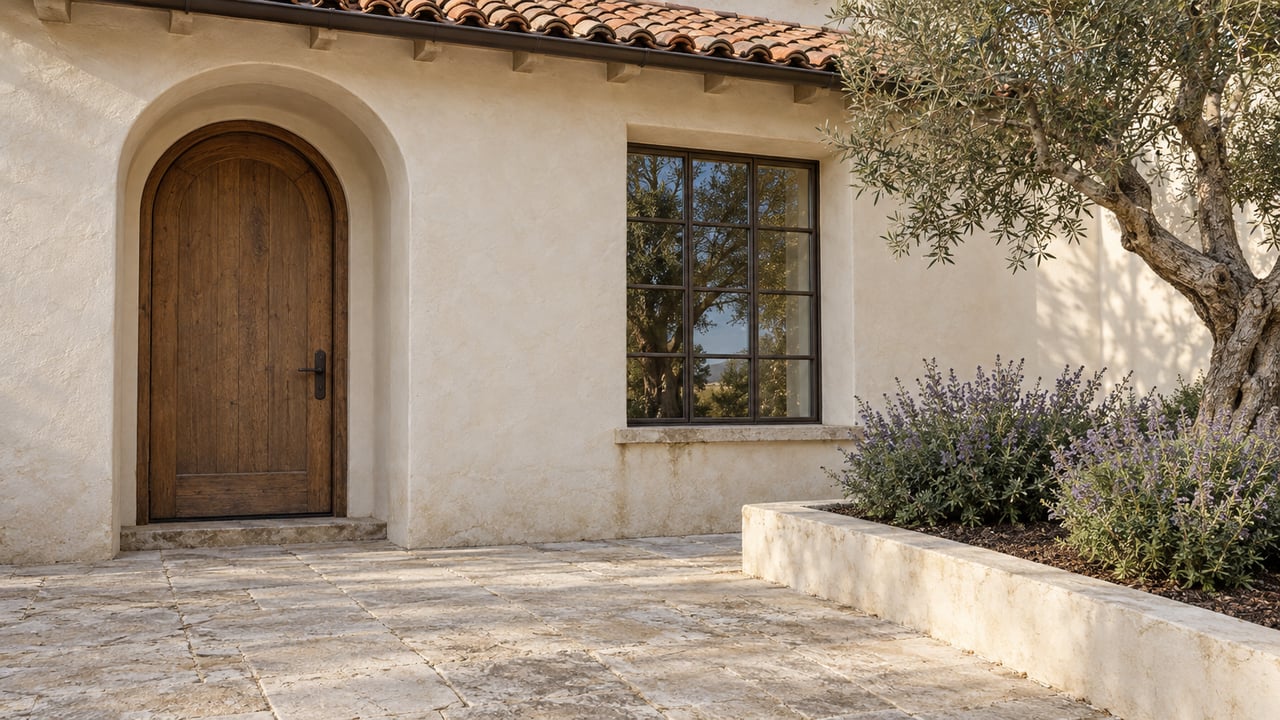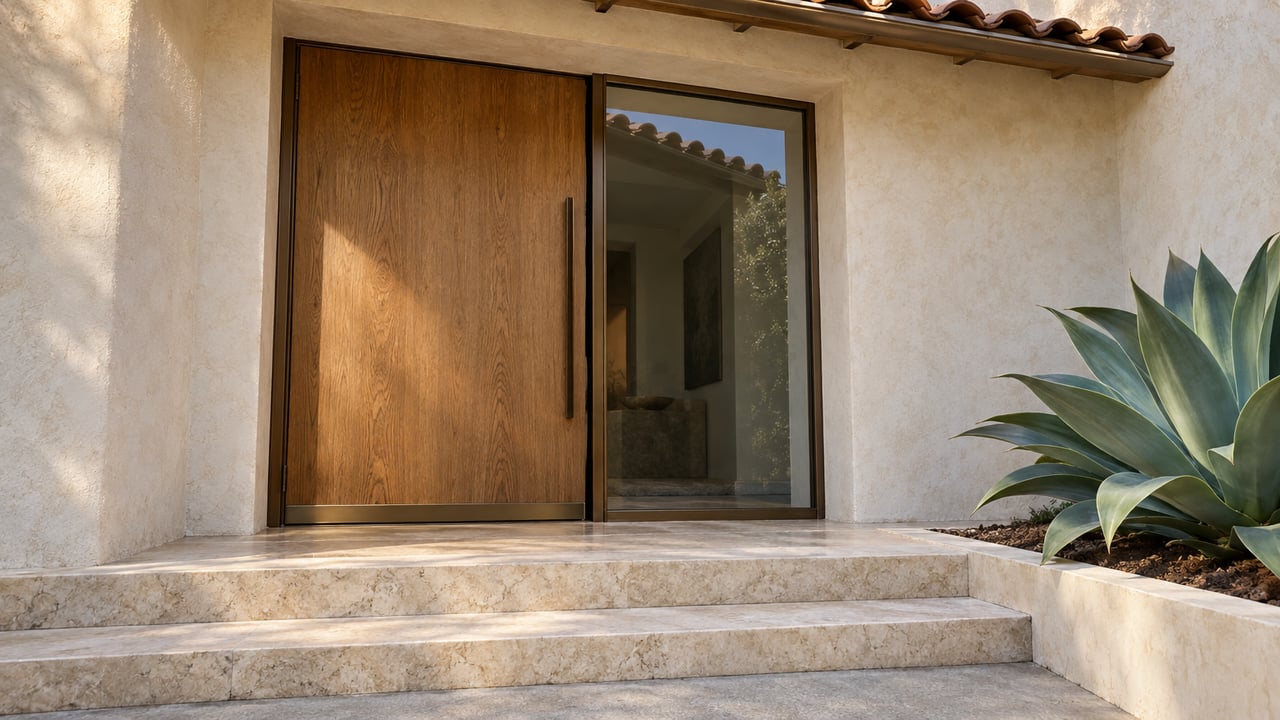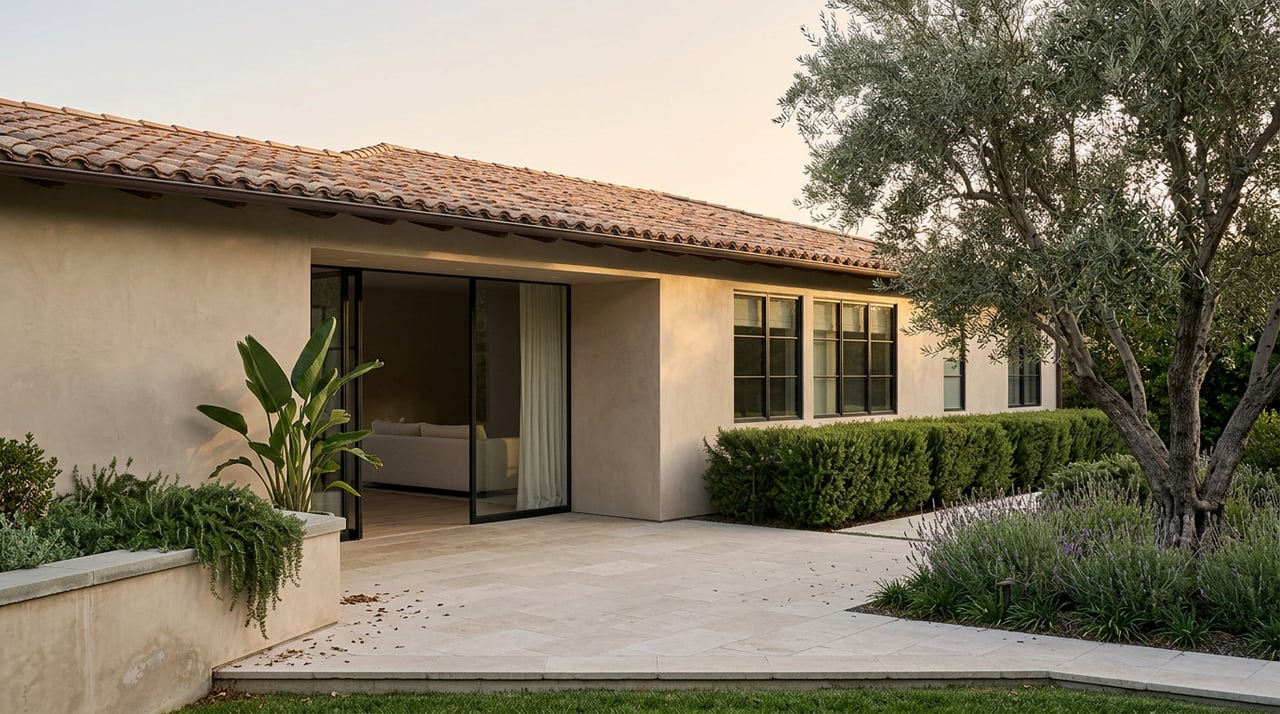
Picture two homes for sale in Rancho Palos Verdes, similar size, similar age, a few streets apart. One qualifies for a conventional mortgage and a standard homeowner's policy without much friction. The other cannot get earth movement coverage from any insurer writing in California, and if the buyer wants to add a bedroom or rebuild after a fire, the answer from the city is no, not even with a permit and a check. Both homes show up in the same median price you saw on a portal search. Neither figure tells you which one you are looking at.
That is the practical problem for anyone comparing Rancho Palos Verdes to Rolling Hills Estates or Palos Verdes Estates using a single number. The city's median blends two markets that behave nothing alike, and the line separating them is not a hillside or a zip code. It is a specific, mapped boundary the city drew around the Greater Portuguese Bend Landslide Complex, and as of September 18, 2025, that boundary carries permanent legal weight.
The Line Is Not New, But It Just Became Permanent
Rancho Palos Verdes has restricted construction in this area since 1978, when the original landslide moratorium went in. What changed recently is durability. The city imposed a temporary building moratorium in October 2023 after land movement accelerated sharply, and under state law that kind of interim ordinance has to expire, which this one was set to do in October 2025. Instead of letting it lapse, the city council adopted permanent Landslide Area Development Regulations on August 19, 2025, effective September 18, 2025. New residential construction on vacant lots within the boundary is prohibited outright. Existing homeowners can repair or replace within their current footprint through what the city calls a Landslide Exception Permit, but building anything new is off the table for the foreseeable future.
The city also widened the boundary when it made the rule permanent, adding eight parcels that had never been subject to any prior moratorium: seven in the Seaview neighborhood and one at the Portuguese Bend Beach Club. If you are shopping in this part of the Peninsula and a listing was outside the regulated area two years ago, that alone does not tell you its status today.
One detail matters more than it sounds like it should: where the boundary line cuts through a single parcel, only the portion inside the line is subject to the regulations. A backyard can be regulated while the house sitting in front of it is not. This is not a neighborhood-level distinction. It is parcel-level, and sometimes it is drawn through the middle of one parcel.
Why the Median Doesn't Hold Up
Redfin's data for the three months ending May 2026 puts the Rancho Palos Verdes median sale price at $1.7 million, up 2.0 percent from the same period a year earlier, with homes selling in about 40 days. That single number is doing a lot of work. It includes homes with unrestricted development rights and conventional financing sitting next to homes inside a permanent construction ban where insurers will not write earth movement coverage at any price.
Look at the same market from the list side and the picture gets stranger. The South Bay market report for September 2026 puts Rancho Palos Verdes' median list price at roughly $2.3 million across about 116 active and coming-soon listings, with a median market time near 71 days and close to 40 percent of that inventory carrying at least one price reduction. A gap that wide between what sellers are asking and what buyers are actually paying has more than one cause, rate sensitivity and inventory timing among them, but a citywide comp set that mixes freely financeable homes with homes that a large share of lenders and insurers won't touch is one explanation that a simple median cannot separate out.
If you're comparing RPV to a neighboring city on price alone, you're not comparing like products. You're comparing a blend against a market that doesn't have this particular split at all.
The Ground Is Slowing Down. The Insurance Market Isn't.
Here's the part that surprises buyers who've done a little homework and think the story is over: the landslide itself has genuinely improved, and it hasn't moved the underwriting needle at all.
The city's own tracking shows the Portuguese Bend landslide decelerating by 92 percent since deep dewatering wells went in roughly two years ago, with about 74 percent of the historical landslide boundary now moving less than an inch per week. Over a recent two-month stretch, Abalone Cove slowed by 7.7 percent to about 1.29 inches per week and Portuguese Bend slowed by 13.9 percent to about 0.81 inches per week. Klondike Canyon showed no measurable movement at all. Seven new dewatering wells, four of them city-funded, are doing real work, coordinated with the Abalone Cove Landslide Abatement District and the Klondike Canyon Landslide Abatement District.
None of that has changed what a standard California homeowner's policy will cover. Earth movement, including cracking, sinking, shifting, and expanding ground, is excluded from ordinary homeowner's insurance in this state regardless of how fast or slowly the ground is moving. A 2024 city survey of residents living inside the landslide complex found that not one of them had insurance that covered landslide damage. Slower movement is good news geologically. It has not reopened a market that insurers decided to exit on different terms entirely.
The city itself is still treating this as an active emergency, not a closed chapter. A council meeting scheduled for September 15, 2026, includes a vote on extending local emergency declarations in the landslide area and continuing a temporary ban on bicycles and motorcycles along a roughly two-mile stretch of Palos Verdes Drive South. That is not the posture of a problem that has been resolved.
The Buyout Program Tells You How Seriously the City Takes the Line
If you want evidence that this boundary isn't a formality, look at how the city is spending money on it. Rancho Palos Verdes is running a voluntary property buyout program funded through FEMA's Hazard Mitigation Grant Program and administered by Cal OES. The city received 85 applications in November 2024 and selected 22 homes for the first round, with the purchase price set at 75 percent of each property's fair market value as of December 1, 2022, the date before major landslide impacts hit. Homeowners who participate give up the remaining 25 percent, aside from certain in-kind costs the city absorbs. Once the city buys a lot, it is preserved permanently as open space. It cannot be redeveloped, ever, by anyone.
A city does not fund a federal buyout program and permanently retire land unless it has concluded that some parcels inside this boundary are not coming back as buildable residential lots. That is useful context for a buyer weighing a fixer-upper inside the line against the idea of eventually adding square footage. The exclusion process does exist for property owners who believe their specific parcel no longer belongs in the regulated area, but it requires meeting a strict safety threshold under the municipal code, and it is not a path most owners will use successfully.
What the City Is Actually Trying to Fix in 2026
The more useful long-term detail for buyers is what happens next. Because no standard insurance product covers landslide damage in California, and because a 2025 bill that would have let the governor declare a state of emergency for non-earthquake landslides failed to pass, Rancho Palos Verdes is working with other affected California cities and counties to build support for a new state-level insurance program modeled on the California Earthquake Authority and the California FAIR Plan. The plan is to build a coalition with other jurisdictions before approaching state legislators and the insurance commissioner before the end of 2026. Nothing here changes financing today. It is worth watching because it is the first serious attempt to create a coverage option where none currently exists, and if it moves forward, it would be the single biggest change to how this part of the market functions since the 2023 moratorium.
Reading Rancho Palos Verdes the Right Way
If you're comparing this city to Rolling Hills Estates or Palos Verdes Estates on a spreadsheet, the median price is the wrong column to anchor on. The right question is simpler and harder to answer from a listing photo: does this specific parcel sit inside the Greater Portuguese Bend Landslide Complex boundary, in whole or in part, and if so, what does that mean for your specific lender and your specific insurer. That is a parcel-by-parcel question, not a citywide one, and it is the kind of question that gets answered with a boundary map and a phone call, not a Zillow filter.
If you're weighing a purchase or a sale anywhere on the Peninsula and want a clear read on what a specific address is actually working with, Jane Angel has spent two decades inside these exact boundary lines. Book an appointment and get a straight answer before you make an offer, not after.