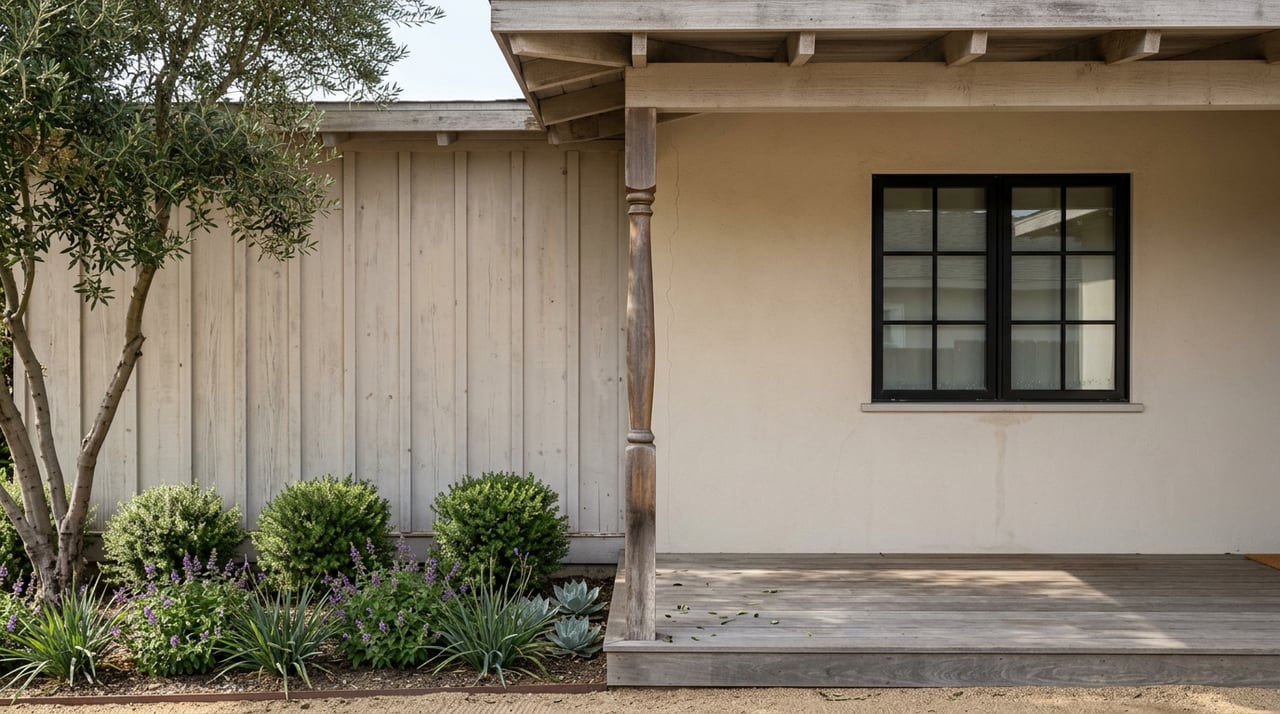
Drive out any of the three gates on a Saturday morning and there is exactly one place inside a five-minute radius where you can buy a sandwich, pick up grain for the horses, and read a bulletin board covered in local horse-for-sale notices, all under the same roof. That building sits at the corner of Palos Verdes Drive North and Rolling Hills Road, and it has been standing there since 1938.
What most residents do not realize, even ones who have shopped there for decades, is that the tack shop and deli counter they know today is the seventh occupant of that same corner. The building has been a beauty shop. It has been a nursery school. It has served as a child guidance center and, at one point, as the original Boy Scout troop house. Among its many roles, it also served as the neighborhood's post office, until that closed for good in 2013. Rolling Hills has never had a public park, a public library branch, or a municipal building inside its own gates. For a stretch of the twentieth century, that one corner was the closest thing the community had to a federal government office of any kind, and even that is gone now.
From Market to Tack Shop, With Five Stops in Between
The building opened in 1938 as the Rolling Hills Market, a general store stocked with the usual grocery items alongside hay, grain, and horse equipment, a combination that made sense in a community built around ranches from the start. Over the next several decades it rotated through uses that had nothing to do with horses at all: a beauty shop, a nursery school, a child guidance center. At some point it also housed the original troop house for the local Boy Scouts. Somewhere in that rotation it served as the local post office too, a role it kept until 2013.
None of that history survives in the building's current form except in old photographs held by the Palos Verdes Library District, but the pattern it left behind is still visible. Whatever institution the neighborhood needed at a given moment, this one corner absorbed it, because there was nowhere else for it to go.
In 1985, Karen Savich took over the space and opened it as a consignment tack store, the first version of the business that operates there today. What started as a place to buy and sell used saddles and riding clothes has since grown into a full tack and feed shop with a working deli counter, and it is still the only commercial address most Rolling Hills residents drive to on a routine basis.
The Deli Counter Doing More Work Than a Restaurant Should
Ask a longtime shopper what actually brings them in and the answer is rarely the tack. It's the sandwiches. Regulars point to the tuna, the pastrami, and the barbecue beef as the reasons they stop by even when they don't need feed or supplies that week. There's a grassy patch outside where people eat lunch instead of taking it home, which turns a supply run into something closer to a social stop.
The consignment side of the business still runs on the same logic Savich built it on four decades ago. Bring in a used saddle, a jacket, or riding boots, and the store takes a cut when it sells: 25 percent on saddles, 40 percent on equipment, 50 percent on clothing. It's a small detail, but it tells you something about how the store thinks of itself. It isn't trying to be a boutique. It's trying to keep gear moving through a community that buys and outgrows riding equipment constantly, at a price structure that has apparently worked well enough to leave unchanged.
The bulletin board on the side of the building fills a role nothing else in the area does. It's where notices go up for horses for sale, boarding availability, and trainers looking for clients, the kind of hyper-local commerce that has no obvious digital equivalent and doesn't seem to need one.
Why the Rest of the Weekend Doesn't Look Like a Weekend Errand List
The store handles the one errand that requires leaving the gates. Everything else residents do close to home runs through private, member-supported ground rather than anything municipal. Storm Hill Park sits on the western side of the community, and Hesse's Gap opens off the Poppy Trail, both maintained as common areas rather than public parkland. West of the gates sits the Los Verdes Golf Club, and the Portuguese Bend Beach Club gives residents a stretch of coast nearby. None of these function as a city park or a municipal course would.
That distinction matters more in Rolling Hills than almost anywhere nearby, because the entire community sits on private property. All of it, roads included, is built on association easements rather than public right-of-way. There is no publicly owned land inside the boundary at all. Three gates, each staffed around the clock, mark the only points of entry into 690 homes, all on lots of at least an acre.
Inside that boundary, recreation runs almost entirely through membership organizations rather than anything a visitor could simply walk into. The Caballeros de Rancho Palos Verdes still puts on an annual pancake breakfast and monthly red-carpet luncheons that draw riders and non-riders alike, along with organized trail rides through the year. The Rolling Hills Community Association also backs a Women's Community Club, one of three organizations the Association points residents toward for programs and volunteer work. None of these require a public building to exist. They just require people willing to keep showing up.
What This Actually Means for a Saturday
Put the pieces together and the shape of a Rolling Hills weekend starts to make sense in a way it might not from the outside. There is no downtown to wander, no strip of shops to browse, no coffee counter competing with three others down the block. There is one building that has spent 88 years absorbing whatever the community needed most, currently doing double duty as feed store and lunch spot. There is a set of clubs old enough to have outlasted the post office that used to sit at that same corner. And there is a small collection of private grounds, a golf course, a beach club, a couple of trail-adjacent parks, that handle everything else.
None of this is a gap waiting to be filled. It's closer to a system that has quietly sorted itself out over nearly nine decades, where one storefront and a handful of member organizations do the work that a town center would do anywhere else. For anyone who already lives inside those gates, that probably isn't news. What might be is just how long that one corner has been doing the job, and how many different things it used to be before it settled into the one job it does now.
If you're curious about a property near that corner, or anywhere else on the Peninsula, Jane Angel is happy to talk it through. Book an appointment whenever you're ready.
This article is general information, not legal, tax or financial advice. Consult a qualified professional about your situation.