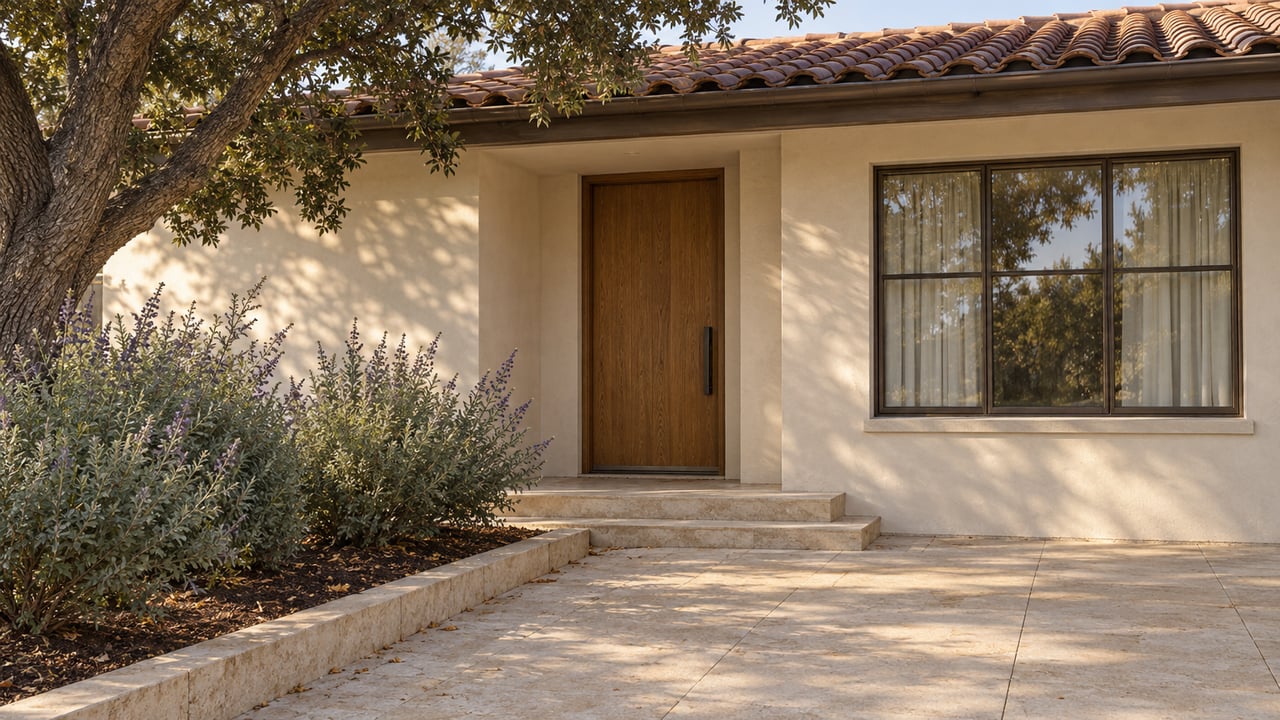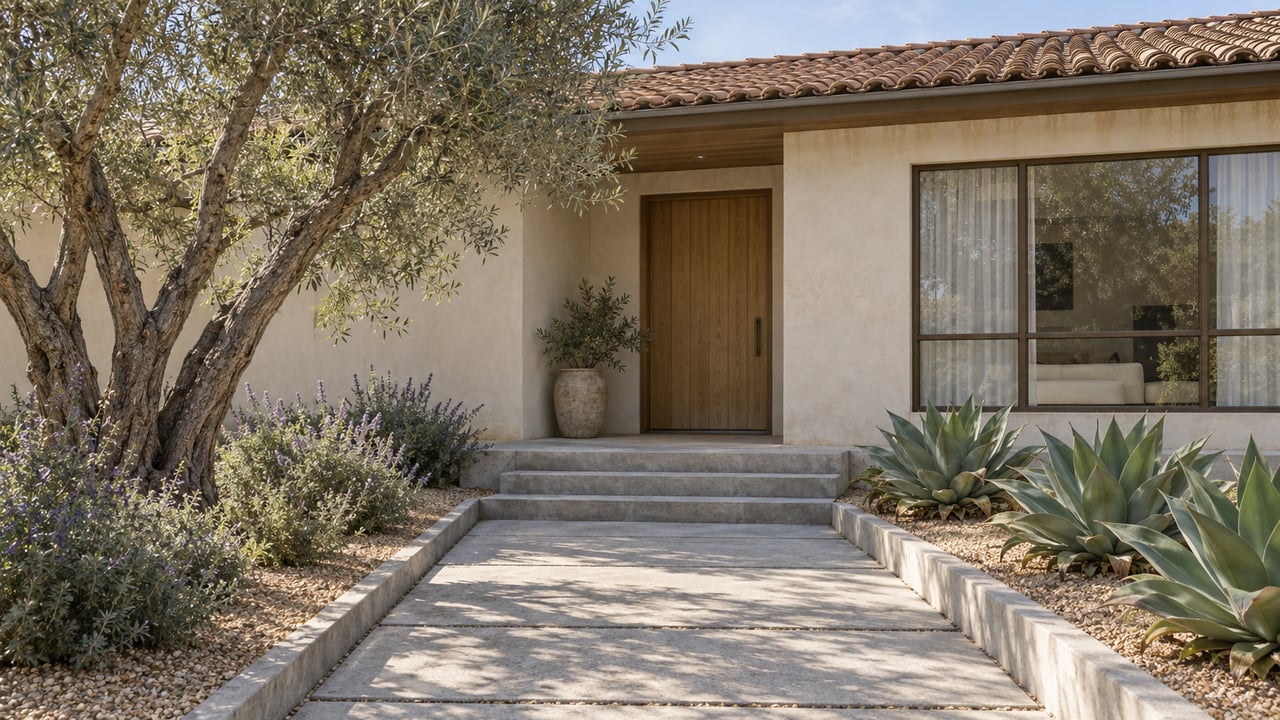
A pool, a deck, a bedroom addition or a new garage in Rolling Hills goes through a septic review before construction starts. The city's adopted 2021–2029 Housing Element describes its wastewater setup plainly.
"Wastewater treatment generally occurs through private septic tanks. Only a few parcels on the western periphery of the city have access to sanitary sewer."
Rolling Hills has also been working on a sewer main along Portuguese Bend Road and Rolling Hills Road for years, and it has federal money set aside for it. The first phase was designed to carry wastewater from City Hall and the Gate House. Home connections depend on later phases that have no funding. For anyone weighing a Rolling Hills property with plans to expand it, the septic system and the county rules around it decide what can be built.
The Permit That Opens the Septic Question
The County of Los Angeles Department of Public Health reviews onsite wastewater treatment systems in unincorporated areas and in cities that have signed a Local Agency Management Program agreement with the county. Rolling Hills is one of those cities, according to the county's onsite wastewater treatment system page. The county page lists the improvements that need its plan review on a property with an existing system. They include room additions, ADUs and JADUs, pools, patios, decks, stairs, retaining walls and other permanent structures.
The county's Requirements and Procedures document, updated June 16, 2025, says when the existing system has to be evaluated by a qualified septic contractor as part of getting a permit:
- Prior plans exist and show the system is older than 15 years.
- Prior plans exist but don't match the house's current floor plan.
- No prior plans exist for the system.
The evaluation checks several things. Is the system sized for the house as it stands? Have later changes to the property affected the required setbacks? Has the tank deteriorated? Are the leach lines or seepage pit working properly? In a city where many homes have been remodeled and added onto over the decades, the second and third triggers can matter as much as the system's age. A house that has grown since its septic plans were drawn may already fail to match them.
Why the Back Corner of the Lot Matters
The septic review also looks past the house. The county explains that even a properly maintained dispersal system, meaning a leach field or seepage pit, eventually needs replacing. It can last 30 years or more. The county sorts a property's undeveloped ground into three categories:
- Well suited: a dispersal system meeting all requirements can go there.
- Moderately suited: a dispersal system can go there only if the tank is upgraded to an advanced treatment or non-conventional system.
- Unsuitable: no dispersal system can go there.
With few exceptions, building a pool, deck, garage, outbuilding, second dwelling or any expansion of the existing building means designating and testing a "future expansion area" as part of the permit. The county gives its reasoning in the same document. Without that step, a project could cover the property's only well-suited ground. The owner might then have to install a non-conventional system "at a significantly increased cost" when the current one fails. In the worst case, no adequate space would remain.
The rules get stricter for new living space. A new residential building, or an added bedroom or bedroom equivalent, where public sewer is more than 200 feet away has to designate and test both the initial dispersal system and the future dispersal area. The application needs a feasibility report, plot plan and floor plan. Expanding past the current footprint, or adding a gazebo, spa, driveway or ground-mounted solar panels, triggers a check of whether the new work intrudes on setbacks for the existing system and the future dispersal area.
On a large Rolling Hills lot, the open ground that looks like the natural spot for a pool or a guest house may be the same ground the county wants kept for the next leach field.
The Sewer Line on Paper
A sewer connection would make this review unnecessary for the homes it reached. The sewer main has been in design since at least 2022, and its first phase still stops at City Hall.
| Date | What the city record shows |
|---|---|
| April 25, 2022 | NV5 had reached 65%, 90% and 100% design milestones on the 8-inch main. Construction was estimated at $1,833,852. Phase 1 was estimated at about $1,100,000, with $441,000 in ARPA money available to cover part of it. |
| January 2023 | The council told staff to phase the sewer main project, with a new 8-inch line in Phase 1, and to look for construction grants. |
| March 2023 | The city's Housing Element progress report, in the March 27, 2023 council agenda packet, set a goal to "Complete Phase I by 2024." |
| June 22, 2026 | The council voted 4-0 to table the project while staff asked Congressmember Lieu's office and the USDA about more funding. |
| November 9, 2026 | The council agenda included an update and asked for direction on whether staff should get a proposal from NV5 to prepare an updated engineering report. |
The April 2022 staff report describes Phase 1 as a new 8-inch line running from the Rolling Hills City Hall and Gate House to an existing 8-inch sewer in Rolling Hills Road in Rolling Hills Estates. It says the downstream pipe "should be able to accommodate sewer flows from City Hall and the Gate House." The 2022 cost figures predate four years of construction cost changes. The USDA now requires an updated Preliminary Engineering Report with current costs and schedules.
Why the Federal Money Hasn't Closed the Gap
The city has $1,000,000 in FY24 Local Project funding through Representative Lieu's office. That money can be spent only on this sewer main. If the city doesn't go ahead, the USDA says the funds should be given up so another community can use them.
The November 9 staff report explains why more grant money isn't coming. USDA grant eligibility depends partly on median household income. The report puts Rolling Hills at $250,001, the highest figure the Census reports, while the additional grant would require a figure below California's non-metropolitan median of $80,546. The USDA did say a loan may be available for 40 years at about 4.75% interest, as of August 2026.
Staff found no other sources ready to apply to. Congressional Local Community Funding is expected to open sometime in February 2027, and the report says no state funding sources are available because of fiscal constraints. None of the adopted city budgets for FY 2023 through FY 2026, nor the proposed FY 2026-27 budget, set aside money for construction. Any spending beyond the $1 million would have to come from General Fund reserves through a budget amendment. Staff also suggested the council could take the project up at a post-election strategic planning workshop, alongside other pending capital projects such as the Eastfield Drive Utility Undergrounding Project.
What a Home Connection Would Take
Even a finished Phase 1 would leave residential lots on septic. The 2022 report says Phase 2 would upsize the 8-inch sewer within the City of Torrance to 10-inch and 12-inch pipe. That upgrade "is needed to support future connections of residential lots in Rolling Hills," and its timing depends on future sewer projects inside the city. The work also crosses jurisdictions. The plans needed approval from Rolling Hills Estates and Torrance, and Torrance asked for traffic control plans and field checks of existing water and storm drain lines.
The city's 2023 Housing Element progress table points to the long-term capacity. One of its listed objectives was an updated "Will Serve" letter from the Los Angeles County Sanitation District showing it could accept effluent from 235 existing homes once a future phase of the sewer system is complete. City budgets through the proposed FY 2026-27 budget have set aside no construction money even for Phase 1.
Questions Buyers Raise
Does the sewer project change anything for a home sale today? Not in its current form. Phase 1 was designed for City Hall and the Gate House, and residential connections depend on a later Torrance upsizing. A Rolling Hills home buyer is buying a property served by its own septic system, which the Housing Element describes as the general case in the city.
Who reviews septic plans for a Rolling Hills remodel? The County of Los Angeles Department of Public Health, under the agreement that lists Rolling Hills among participating cities. The county reviews plans and covenants and inspects sites and installations before final approval of a system design. Owners proposing improvements submit an application and plans and pay fees.
When does the Rolling Hills City Council meet next? The city calendar lists City Council meetings on November 23, December 14 and December 28, 2026. Agendas are posted on the city's meetings page.
This post is general information, not legal, financial or engineering advice. Owners and buyers should confirm septic and permit requirements for a specific property with the county and qualified professionals.
When a Rolling Hills listing comes with a pool plan, an addition in mind or septic records that don't match the house, Jane Angel can help pull the paperwork together early and coordinate the contractors who evaluate the system before buyers ask. Book an appointment to go over the septic file for your property.