A buyer looking at Rolling Hills from the outside sees two numbers on a listing page: the acreage and the asking price. Divide one by the other and the math looks generous. A three-acre parcel behind the gates at a price that would buy a quarter-acre lot in Manhattan Beach reads like a bargain on land.
The math is misleading. In Rolling Hills, the lot size on the listing is not what you can build on. A pair of overlapping rules, one from the Rolling Hills Community Association and one from the City of Rolling Hills, shrinks the denominator before the 35% coverage cap is applied. Understanding that formula is the difference between buying the estate you pictured and buying an easement with a house on it.
The Rule Behind the Ranch-Style Look
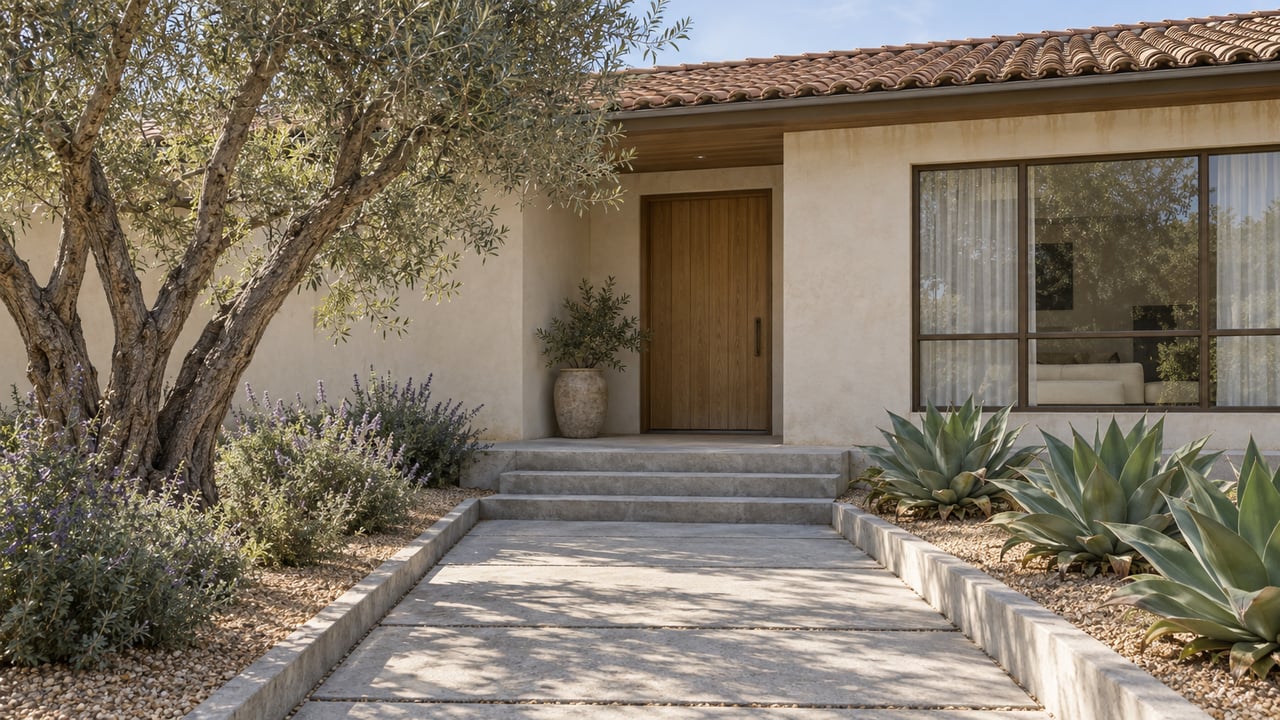
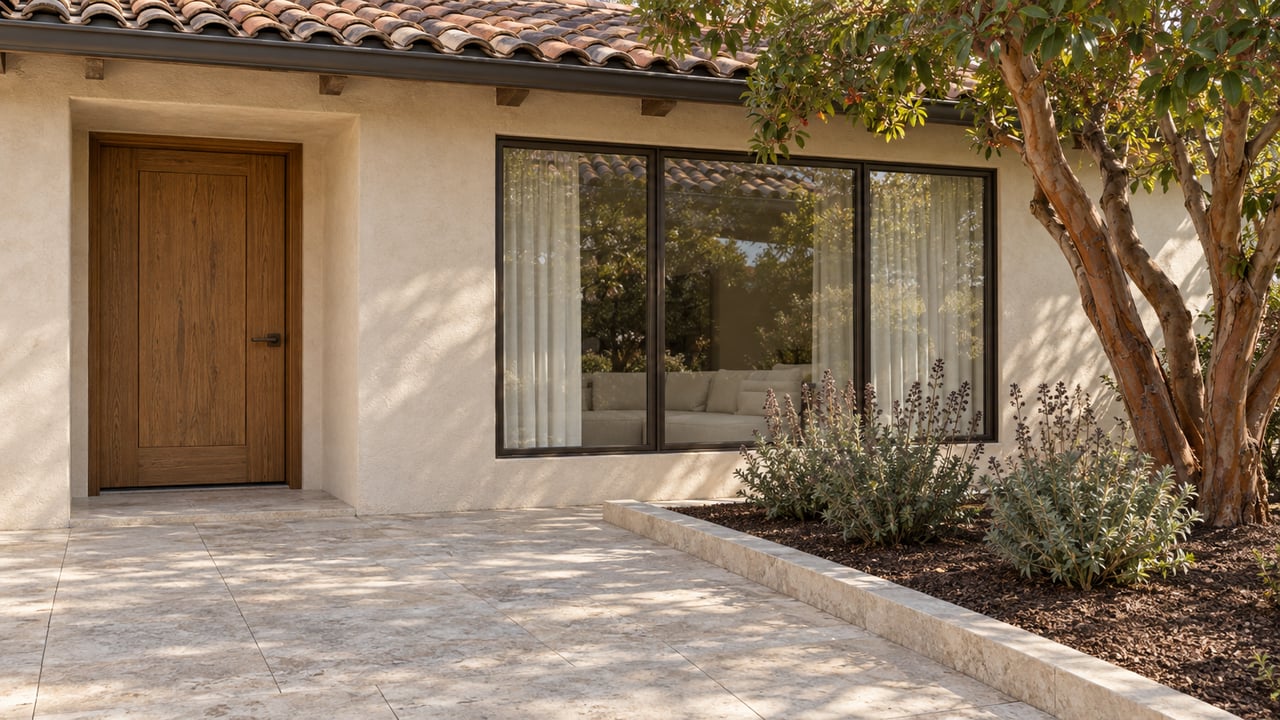
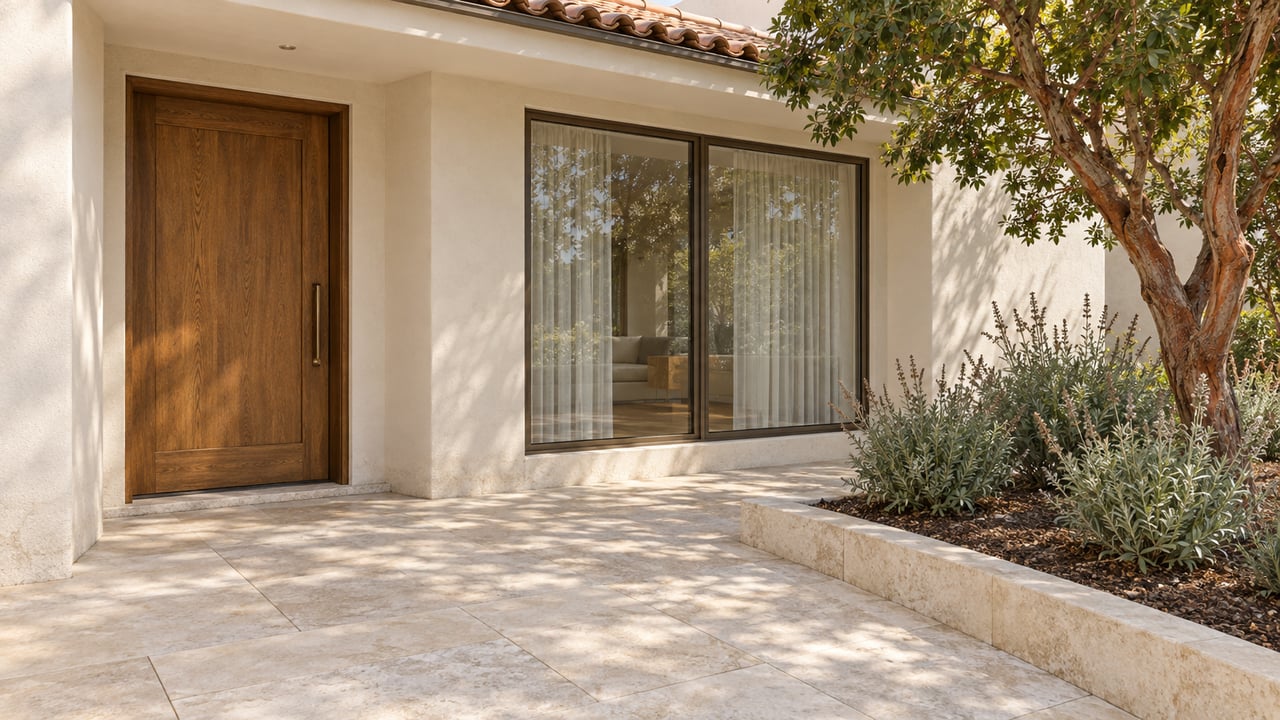
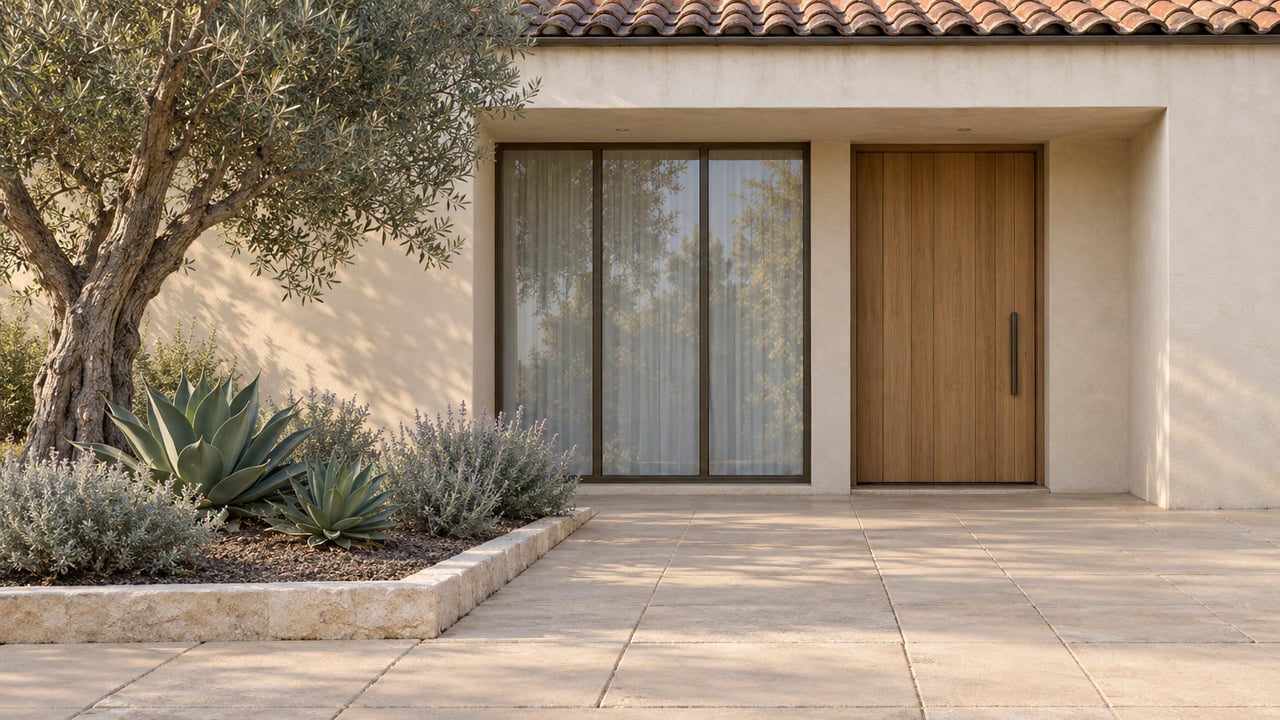
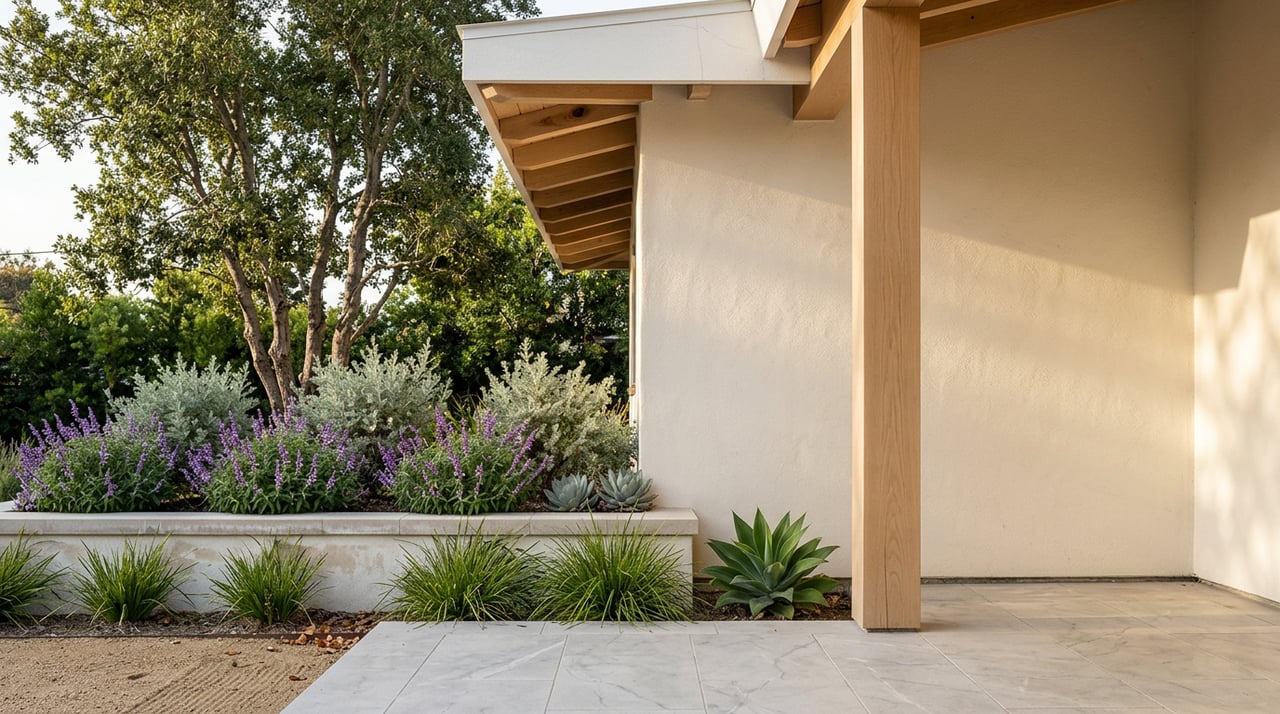
Rolling Hills has looked the same since A.E. Hanson founded it in 1936. About 690 homes, one-story where possible, white exteriors with earth-tone trim, three-rail white perimeter fencing, and no commercial parcels inside the three staffed gates. That consistency is a policy outcome, not a stylistic accident. The RHCA Architectural Committee reviews exterior work, issues its own building permits, and can stop construction that proceeds without approval.
The lever that actually controls scale is buried in the City's development standards. Structures plus paving cannot exceed 35% of the "net lot area," and the definition of net lot area does the work:
"net area" shall exclude: a) the entire area within a recorded roadway easement plus the area within ten (10) feet measured perpendicular to the edge of the roadway easement; (b) the ten (10) foot perimeter of the lot perpendicular to the property lines on all sides; (c) any private drive or driveway that provides access to any other lot or parcel; and (d) the access strip portion of a flag lot.
Every one of those exclusions is common in Rolling Hills. The roads are on association easements, so nearly every lot fronts one. Shared driveways are the norm on the interior loops. Flag lots exist throughout the older sections. By the time the exclusions come off, a "three-acre" parcel can lose a third of its area before the 35% cap is even applied.
Running the Math on a Portal Number
Consider a lot advertised as 3.0 acres, roughly 130,680 square feet. Below is what a Rolling Hills buyer should actually be pricing.
| Line item | Square feet | Running total |
|---|---|---|
| Gross lot size (3.0 acres) | 130,680 | 130,680 |
| Roadway easement plus 10 ft perpendicular | -8,000 | 122,680 |
| 10 ft perimeter setback | -6,500 | 116,180 |
| Shared driveway serving a neighbor | -3,500 | 112,680 |
| Net lot area | 112,680 | |
| 35% cap on structures + paving | 39,438 |
The exclusion values are illustrative and lot-specific, but the direction is not. A buyer who assumed 3.0 acres would support a large main house, a guest house, a pool with decking, a motor court, a stable, and a riding ring is running the numbers against roughly 39,000 buildable square feet, not 130,000. Existing improvements come out of that budget first. On a lot with an older ranch house, a full driveway, and a pool, the remaining envelope for an addition or a new accessory structure can be a few thousand feet, not tens of thousands.
This is the number that explains why the housing stock stays low, why teardowns are rare, and why sellers who have already used their coverage command a premium the raw acreage does not predict.
Why the 999-Square-Foot Threshold Matters
The City distinguishes small additions from larger ones. Additions under 999 square feet in any 36-month period, measured from the final inspection of the prior addition, can move through an administrative approval path. Anything larger goes to full site plan review with the Planning Commission, then to the RHCA Architectural Committee, then to the Department of Building and Safety.
For a Rolling Hills seller, that threshold shapes the pre-listing question in a specific way:
- Pull the property's coverage history from the City and confirm how much of the 35% envelope is already spoken for.
- Compare the remaining envelope against the improvements a likely buyer would want, whether that is a primary suite expansion, a pool house, or a stable meeting the 200 sf shelter and 550 sf corral standards allowed under administrative approval.
- Decide whether to complete a targeted addition before listing, sell with the entitlement work partly done, or price with the constraint disclosed.
Buyers who skip step one and rely on the listing photos discover the answer during their own architect's feasibility study, usually after the inspection contingency has expired. Sellers who can hand a buyer a coverage calculation and an RHCA file with clean approvals remove the single largest source of post-offer renegotiation in this market.
What This Means Against 2026 Prices
The 2026 numbers make the coverage question sharper, not softer. Redfin reported a Rolling Hills median sale price of $5,221,875 in May 2026. RubyHome's July 25, 2026 snapshot showed 13 active listings with a median list around $6 million and an average of 90 days on market. Active inventory in late July ranged from a $3.8 million four-bedroom on Spur Lane to a $19.5 million estate on East Crest Road, with a $4.25 million Poppy Trail listing and a $6.795 million Buggy Whip Drive listing between them.
A ten-times spread in a market of 13 listings is not really about square footage. It is about which lots have a usable coverage budget left and which do not. The estates trading at the top of the range are almost always the ones where a recent seller preserved or expanded the envelope through the RHCA and City review process. The listings that sit are frequently the ones where the buildable answer requires a variance the buyer would rather not fight for.
The same logic runs in the other direction for sellers. In a market with median days on market near 90 and a sale-to-list ratio that Redfin most recently tracked at 98.5%, the sellers who close closest to asking are the ones who have already answered the coverage question in writing before the first showing.
The Details Buyers Miss Until Escrow
The dual-governance model produces a set of ownership rules that never appear on a listing but always appear during due diligence:
- Perimeter fencing must be three-rail and painted white, and new or replacement fencing requires a survey and an RHCA fence permit.
- Exteriors must be pure white with no tint. Trim, doors, and shutters in another color require Architectural Committee approval of color samples.
- Private tennis courts and riding rings need a City permit and RHCA design approval.
- Households are limited to three dogs, regulated by the City.
- The RHCA levies an annual assessment at 20 cents per $100 of assessed valuation set by Los Angeles County, on top of standard property tax.
- Workers, guests, deliveries, and ride-share drivers are cleared at the gate, with construction workers generally limited to Monday through Saturday during business hours.
None of these are deal-breakers. All of them are line items a Rolling Hills buyer should price in before the appraisal, not after.
FAQ
Does the 35% coverage cap apply to the whole lot or only to buildings? It applies to structures and paving together, calculated against the net lot area rather than the gross acreage. Pervious surfaces such as decomposed granite, pavers set in sand, and grasscrete may be treated differently, and the City can require manufacturer specifications to verify that a material qualifies as pervious.
Is view preservation an RHCA matter or a City matter? Both. Neighbors are encouraged to work out view issues privately. When they cannot, the City handles view impairment through its municipal process, and the RHCA has a separate process tied to its deed restrictions.
Can a buyer plan on tearing down and rebuilding larger? Not without engaging both entities early. New construction requires City site plan review and RHCA Architectural Committee approval, and the coverage math is calculated against the same net lot area regardless of whether the project is a scrape or an addition. The Architectural Committee is explicit that new homes should read as traditional or contemporary California ranch, single-story where feasible.
If you are weighing a Rolling Hills purchase or preparing an estate here for sale, the coverage file is where the conversation should start. Jane Angel has spent two decades reading these files for Peninsula sellers and buyers, coordinating pre-listing work with contractors and the RHCA process, and pricing homes against what a buyer's architect will find rather than what the listing photo suggests. Book an appointment to walk through your property's net lot area, your remaining envelope, and what that means for your position in the 2026 market.