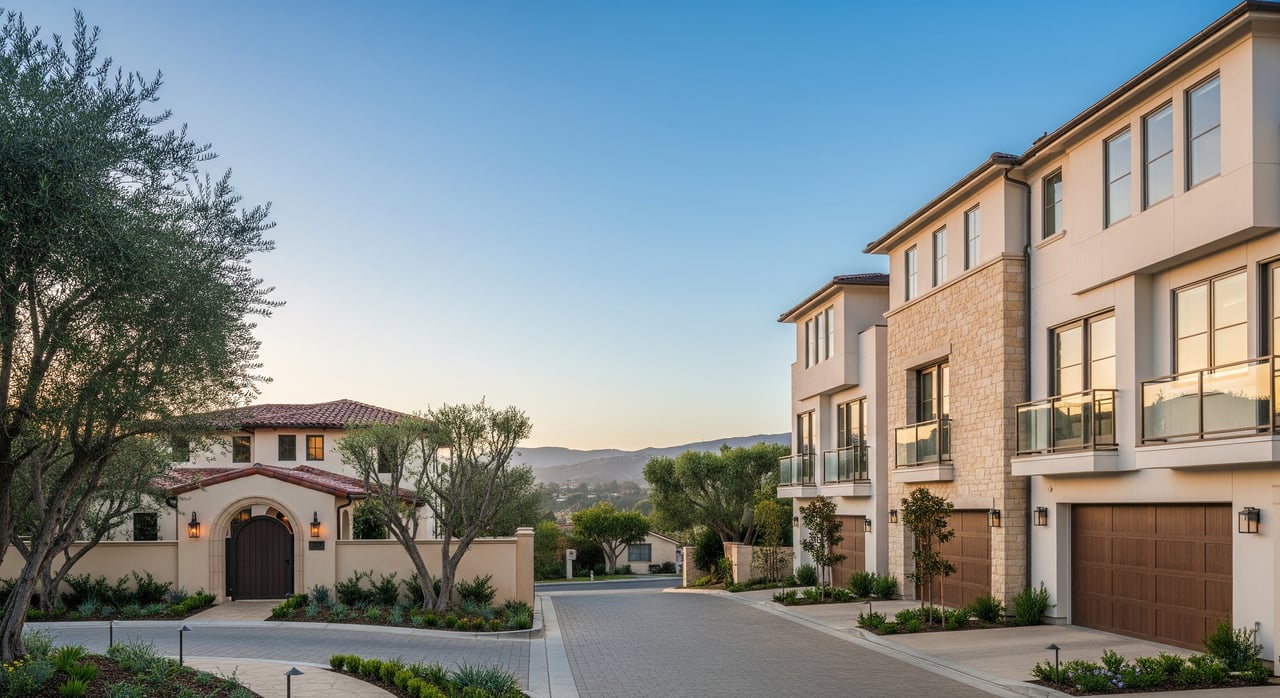
Trying to choose between a low‑maintenance townhome and a private single‑family home in Rolling Hills Estates? You are not alone. On the Palos Verdes Peninsula, the tradeoffs are sharper because land, views, and school district drive value in unique ways. In this guide, you will learn how costs, control, financing, and resale prospects differ locally so you can decide with confidence. Let’s dive in.
How the local market shapes your choice
Rolling Hills Estates is a low‑density city on the Palos Verdes Peninsula with hillside terrain and higher land values than many parts of Los Angeles County. Most homes are single‑family on medium to large lots, often with mature landscaping and, in some areas, ocean or canyon views. Townhomes exist, but they represent a smaller share of the inventory and are usually clustered near commercial areas and main roads.
Palos Verdes Peninsula Unified School District (PVUSD) is widely regarded as high performing, which is a key value driver for many buyers. Because land is scarce and parcels are unique, single‑family homes often command a premium compared with townhomes. Inventory is tight and can change quickly, so current pricing and days on market should be confirmed from recent MLS data before you make decisions.
Townhome vs single‑family: what changes for you
Ownership and control
- Townhome ownership often falls under a homeowners association (HOA) with CC&Rs and bylaws that set rules for maintenance, exterior changes, rentals, and architectural controls. Common areas are typically maintained by the HOA.
- Single‑family homes are usually fee simple. You control the land and structure, subject to city rules and any neighborhood HOA if present.
Upfront and ongoing costs
- Purchase price: Single‑family homes typically cost more in Rolling Hills Estates because of land, lot size, and views. Townhomes can be less expensive but still sell at strong prices in desirable locations.
- HOA fees: Townhomes usually have higher monthly HOA dues that cover common area upkeep, exterior items, and sometimes amenities. Some single‑family neighborhoods have low or no HOA fees.
- Maintenance: Townhome owners pay HOA dues for shared and exterior items, while single‑family owners cover all yard, roof, driveway, and exterior repairs directly.
- Property taxes: California’s Proposition 13 sets a base rate near 1 percent of assessed value plus local assessments. Always verify the assessed value and any special assessments with the county.
Financing and insurance
- Financing: Single‑family homes generally qualify for a broad range of conventional, FHA, VA, and jumbo loans. Townhome or condo purchases may require project approval for FHA/VA and can involve extra lender reviews.
- Insurance: Townhome owners usually carry an HO‑6 policy for interior finishes and personal property, while the HOA’s master policy covers common areas and some exterior elements. Single‑family owners carry HO‑3 policies for the dwelling and liability. Earthquake insurance is a separate policy and is often recommended in this region.
Rental use and restrictions
- Townhome HOAs often set rental caps, minimum lease terms, or other limits. Always confirm rules before you buy.
- Single‑family homes outside of an HOA generally face fewer private restrictions, but city rules still apply. Short‑term rentals are limited across much of the Peninsula, and HOA rules may be stricter than city ordinances.
- Local rental demand tends to favor longer‑term tenants, including households that value PVUSD schools.
Resale and liquidity
- Single‑family homes often attract a wider buyer pool and may carry premiums tied to land, privacy, and views. Townhomes appeal to downsizers, entry buyers to the Peninsula, and anyone prioritizing lower exterior maintenance. Scarce inventory can benefit sellers of both, especially well‑located single‑family properties.
Local factors to weigh in Rolling Hills Estates
Land, views, and privacy
Hillside lots and view corridors matter here. Larger lots with privacy and potential outdoor living spaces tend to push single‑family values higher. Townhomes trade a large private yard for easier upkeep and proximity to services.
Schools and neighborhood context
PVUSD’s reputation as a high‑performing district draws many buyers. If school proximity is important to you, confirm attendance boundaries for the specific address and weigh commute patterns to campuses when comparing homes.
Commute and convenience
Rolling Hills Estates is a suburban peninsula community. Some townhome clusters are closer to shops, errands, and major roads, which can reduce daily drive time. Single‑family neighborhoods often feel more secluded, which buyers seeking privacy value.
HOAs and complex health
HOA rules and finances vary. Review CC&Rs, budgets, reserve studies, meeting minutes, and insurance certificates to understand maintenance responsibilities, reserve strength, and any history of special assessments. A healthy HOA can support long‑term value.
Natural hazards and insurance
This is Southern California, so earthquake risk is a reality, and some areas can have elevated wildfire exposure. Ask for local hazard disclosures and maps, then get quotes for earthquake and homeowners insurance. Understand what the HOA master policy covers and where your personal policy must begin.
Which fits your life right now?
When a townhome can be a fit
- You want lower exterior maintenance and are comfortable with HOA rules.
- You prefer a convenient location near shops or main roads without managing a large yard.
- You are downsizing but want to stay on the Peninsula and keep daily upkeep simple.
- You are investing and can accept HOA rental policies after confirming them.
When a single‑family home can be a fit
- You want a private yard, larger lot, or potential for an ADU (subject to local rules).
- You value control over exterior changes and landscaping with minimal HOA involvement.
- You aim to capture premiums tied to views, land, and privacy.
- You plan longer‑term ownership and want flexibility for future improvements.
Seller tips tailored to each property type
If you are selling a townhome
- Highlight the simplified lifestyle: exterior maintenance through the HOA, convenience, and any on‑site amenities.
- Showcase updated interiors and storage solutions. Buyers respond to move‑in‑ready finishes when yard space is smaller.
- Prepare HOA documents early, including budgets, reserve studies, insurance certificates, and any special assessment history.
If you are selling a single‑family home
- Lead with lot size, outdoor living areas, views, and privacy.
- Note potential for additions or ADUs subject to city rules and permitting.
- Present landscaping, drainage, and roof condition clearly. Buyers weigh these items heavily without an HOA.
A quick buyer checklist
For all properties
- Pull recent comparable sales for the immediate area and product type from the MLS.
- Confirm property boundaries and easements with the title report.
- Verify assessed value, tax basis, and any special assessments with the county.
- Order local hazard disclosures and review fire, flood, and earthquake risk.
- Check PVUSD school attendance boundaries for the exact address if schools are a factor.
For townhomes and condos
Review CC&Rs, bylaws, budgets, reserve study, meeting minutes, and litigation disclosures.
Confirm whether the HOA master policy is bare walls‑in or single entity, then tailor your HO‑6 coverage.
Ask your lender about condo or townhome project approval and how it affects loan options.
For single‑family homes
- Check for any HOA or private road maintenance agreements.
- If you plan to expand or add an ADU, consult city planning and building departments about setbacks, grading, and design review.
- Verify sewer or septic details and maintenance records.
Financing and insurance
- Ask your lender about down payment, jumbo options, and approvals that might apply to a townhome project.
- Get quotes for homeowners and earthquake insurance. If buying a townhome, understand the HOA master policy to avoid coverage gaps.
Next steps with a local advisor
The right choice in Rolling Hills Estates depends on how you balance lifestyle, maintenance, and long‑term value. A careful review of HOA rules, site features, and current MLS data will clarify your path. If you want a clear, side‑by‑side plan for specific homes, connect with a local expert who lives this market every day.
If you are ready to compare options, coordinate pre‑offer due diligence, or position your property for the best result, reach out to Jane Angel. Her boutique, high‑touch approach is backed by two decades of Peninsula results and the reach of Coldwell Banker Global Luxury.
FAQs
Why are single‑family homes more expensive in Rolling Hills Estates?
- Land value, larger lots, privacy, and the potential for views often command premiums, and limited developable land supports higher pricing.
How do HOA fees affect townhome ownership costs here?
- HOA dues cover common areas and some exterior items, which lowers maintenance time but increases monthly costs, so include dues in your total payment.
Are townhomes easier to finance than condos in this area?
- Often yes, but lenders still review project health; single‑family homes usually face the fewest project‑level requirements.
Can I add an ADU to a property in Rolling Hills Estates?
- Many single‑family lots allow ADUs under California law subject to local rules; townhome and condo owners must also meet HOA restrictions.
What insurance do I need if I buy a townhome?
- You typically need an HO‑6 policy for interior finishes and personal property, while the HOA master policy covers common areas; consider earthquake coverage too.
Are short‑term rentals allowed in Rolling Hills Estates?
- Short‑term rentals are limited across much of the Peninsula and may be further restricted by HOA rules, so verify city and HOA policies before renting.
Which holds value better long term on the Peninsula?
- Single‑family homes often hold an edge due to land and privacy, while well‑located, well‑managed townhomes can perform strongly with the right buyer demand.